


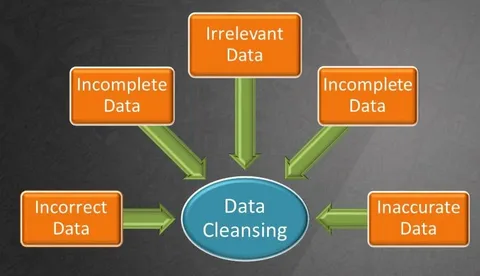
In the age of information, data is the digital crude oil—the essential resource powering modern enterprise.1 Yet, just as crude oil is useless without refining, raw data is often polluted, riddled with errors, inconsistencies, and inaccuracies.2 Before any organization can unlock the true power of its data assets, it must first execute a meticulous Data Cleansing Audit. This formal, systematic process is not just about fixing errors; it’s about quantifying the scale and nature of those errors to understand the true cost of “dirty data.”
To grasp the importance of this, consider data science not as complex programming, but as the meticulous work of a forensic accountant. The data scientist isn’t just balancing books; they’re investigating transactions, looking for anomalies, missing entries, or fraudulent duplicates.3 The Data Cleansing Audit is the initial phase of this investigation—a deep-dive inspection to formally document every compromised record, every misplaced decimal, and every inconsistent label before the true analysis can begin. Without this audit, the resulting insights—like a forensic report based on flawed evidence—will be unreliable, leading to disastrous business decisions.
The Anatomy of an Audit: Profiling and Discovery
A Data Cleansing Audit begins with Data Profiling, the crucial discovery phase.4 This involves running automated tools and scripts across the entire dataset to generate statistical summaries. The goal is to establish baseline metrics for data quality.
The key audit activities here include:
- Completeness Check: Quantifying the percentage of null or missing values in critical fields (e.g., how many customer records lack a valid email address?).
- Uniqueness Check: Identifying and counting duplicate records or non-unique keys that should be singular (e.g., two different customer IDs assigned to the same person).
- Validity Check: Measuring the percentage of records that violate defined business rules (e.g., an “Age” field containing a value greater than 150).
These metrics, often presented as a “Data Quality Scorecard,” move the discussion beyond vague concerns about “bad data” into quantifiable, actionable problem statements. This foundational rigorousness is a core principle emphasized in top data science classes in Bangalore.
Error Quantification: Type and Frequency Categorization
The most critical output of the audit is the formal categorization and quantification of errors. Data errors are not monolithic; they fall into distinct categories that require different cleansing techniques.5 The audit must provide a precise count for each:
- Syntax Errors: Errors related to format and structure.6 Example: A phone number field that contains letters, or a date in ‘DD/MM/YYYY’ format when ‘YYYY-MM-DD’ is required.
- Semantic Errors: Errors related to the meaning or business reality of the data. Example: A record showing an employee’s salary as $10 per year, which is technically valid but semantically impossible.
- Referential Integrity Errors: Errors where relationships between tables are broken.7 Example: A transaction record referencing a Product ID that doesn’t exist in the master Product table.
By quantifying that, say, 15% of records suffer from syntax errors in the address field and 5% suffer from semantic errors in the price field, the business can accurately allocate resources and prioritize the most damaging issues first.
The Cost of Error: Impact Assessment
An audit must transition from simply counting errors to assessing their business impact. This is achieved by creating a formal Impact Assessment linked to the quantified error frequency.
For example, if a high frequency of syntax errors in a customer’s address (a $\sim$20% error rate) is directly linked to an increase in returned shipments and failed delivery attempts, the audit can calculate the direct cost in terms of wasted shipping fees, handling time, and lost customer goodwill. This process transforms a technical data problem into a clear financial problem, compelling executive action. This focus on business value over purely technical metrics is a hallmark of comprehensive data science classes in Bangalore.
Real-World Case Studies in Audit Excellence
The power of a Data Cleansing Audit is best demonstrated through real-world scenarios:
- Case Study 1: Retail Loyalty Program Migration
A major global retailer was migrating millions of customer loyalty records to a new system. A pre-migration audit revealed that ∼12% of records contained duplicate profiles due to inconsistencies in name and address entry (e.g., ‘St.’ vs. ‘Street’). Quantifying this 12% allowed the retailer to pause the migration, execute a focused de-duplication process, and save an estimated $5 million in communication costs (avoiding sending two identical welcome packets to the same customer) and ensuring accurate rewards accrual. - Case Study 2: Pharmaceutical Clinical Trials
A pharmaceutical firm conducting multi-site drug trials relied on patient data for efficacy analysis. An audit of their case report forms showed that ∼8% of drug dosage fields contained semantic errors—dosages outside the clinically approved range—and were not syntactically caught. By quantifying the error rate, the firm was able to stop the trial before the compromised data polluted the final analysis, preventing potentially severe regulatory penalties and saving months of wasted research effort. - Case Study 3: Financial Risk Reporting
A national bank’s regulatory risk reporting relied on accurate identification of counterparty organizations. An audit showed that ∼5% of counterparty names had referential integrity errors, meaning the names were inconsistent (e.g., using “IBM Corp.” vs. “International Business Machines”). The audit quantified this risk, showing that failure to consolidate these identities led to an ∼18%$ underestimation of the bank’s true exposure to certain entities, a finding that drove immediate investment in master data management (MDM) tools.
Conclusion: Data Quality as a Strategic Asset
A Data Cleansing Audit is more than a technical exercise; it’s a strategic imperative. It provides the empirical evidence necessary to transform data quality from a peripheral IT concern into a central business function. By formally quantifying the types and frequency of data errors, organizations can accurately calculate the return on investment for cleansing efforts, ensuring that their digital crude oil is properly refined and ready to power intelligent decision-making. For any organization serious about leveraging advanced analytics, the audit is the non-negotiable first step.
