


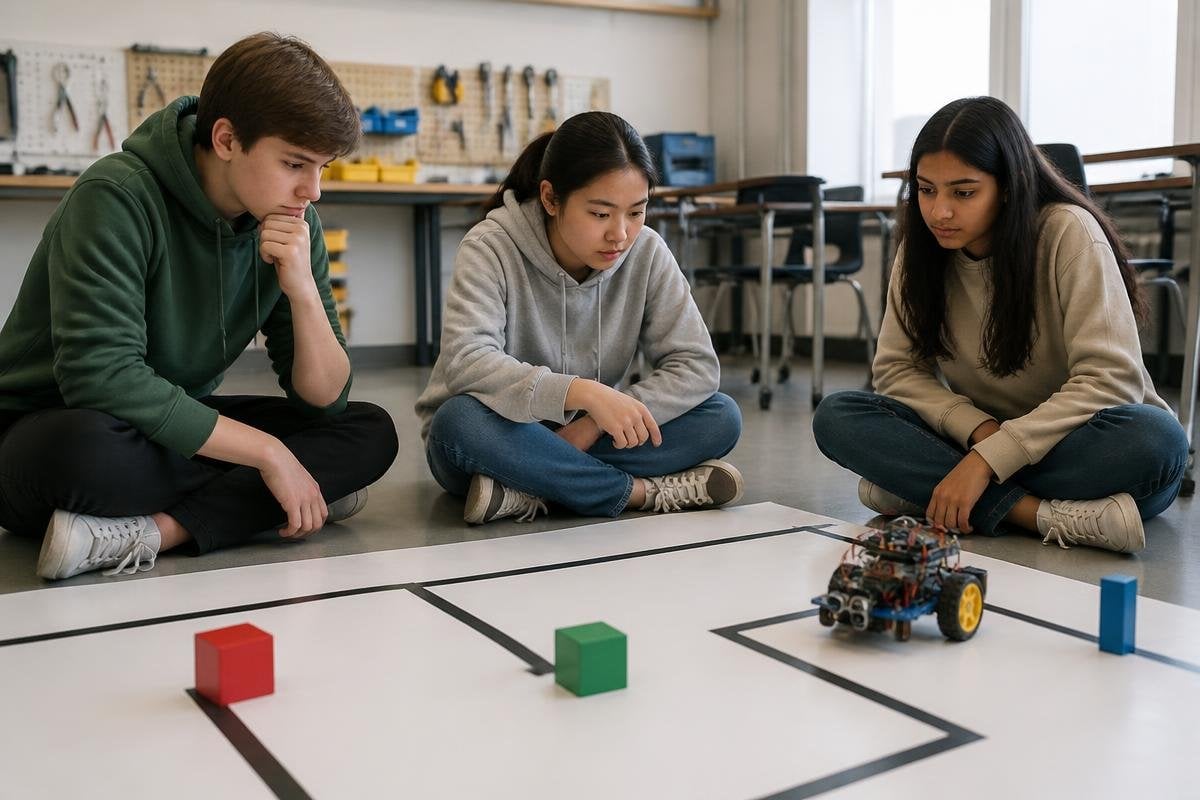
A robot that misses its target gives students something useful: a problem they can see, measure, and fix. Robotics lessons build problem-solving skills by turning ideas into moving systems with clear results.
- Students turn a goal into smaller tasks
- Tests show which part failed
- Code, wiring, and mechanics must work together
Start with a task, not a lecture
A robotics project works best when the goal is clear. Move an object, follow a marked path, sort items, or stop before hitting a barrier. The task gives students a reason to learn each part of the system.
That reason matters because a robot combines several kinds of work. Students may need to choose a motor, place a sensor, write a control rule, and decide how the robot should react. Each choice changes what happens next.
The teacher can then ask a practical question: what should the robot do, and what does it do now? Students have to describe the gap before they can fix it. That habit applies to automation work long after the class ends.
Break large problems into smaller tests
A robot rarely fails for one obvious reason. A wheel may slip, a sensor may read the wrong surface, or a program may send the motor the wrong command. Students learn to split one large problem into parts they can check on their own.
A useful lesson might test the motor before adding the sensor. The next test could check whether the sensor detects a line at different distances. Only after those parts work should the student run the full program.
This order gives the student a clear path through the fault. It also reduces guesswork. If the motor works alone and the sensor works alone, the next test can focus on how the code joins them.
Use failure as information
A failed run gives students a result to study. The robot stopped early. It turned too far. It reached the object but could not lift it. Each result narrows the next question.
Good robotics teaching asks students to record what changed between runs. They might alter one speed value, move one sensor, or change one line of code. That makes the test easier to understand because several new factors do not arrive at once.
The process also teaches patience without making patience the lesson. Students can see that a failed test still gives them useful information when they know what to check next.
A failed robot task gives students something they can inspect: the sensor reading, code rule, or setup that led to it. Reports from Robot24.com can give educators named machines and test details for lessons on those links. That makes the move from problem solving to code, hardware, and people feel earned.
Connect code, hardware, and people
Robotics education also asks students to connect different kinds of thinking. A program may be correct on screen while the robot fails because the battery is low or the gripper cannot reach the object.
That connection helps students test the whole system instead of blaming one part too early. They learn to check power, wiring, software, movement, and the task itself.
Group projects add another layer. One student may write code while another checks the frame or sensor. The team still needs a shared test plan, clear notes, and a decision about which change to try next.
I’d fund robotics classes that give students time to test their own ideas, not classes built around copying a finished robot.
A practical classroom checklist
Before starting a project, check that the lesson includes:
- A clear task with a result students can see
- One test for each major part before the full run
- A way to record settings, changes, and results
- Time for students to fix a failed design
- A short explanation of why the final design works
This checklist keeps the robot from becoming a decoration. The machine should give students evidence they can use while they think through the next move.
A strong project may end with a robot that still misses its target. If students can explain why, show what they tested, and name the next change, the lesson has built a problem-solving habit that matters in every robotics lab.
